
Campo Testaccio, the wooden stands where Roma learned to be loved
The first home, 1929-1940
Five-nil to Juventus. On 15 March 1931, in via Nicola Zabaglia, Roma faced the side they had never beaten, with top spot in the table at stake, and overwhelmed them. It happened on a wooden ground painted yellow and red, planted in a working-class rione squeezed between Monte dei Cocci and the Pyramid. Its name was Campo Testaccio. Every Romanista should know that name the way you know the name of your own street, because that is where our story found a home.
An English theatre in the middle of the rione
When those stands went up, Roma were barely two years old. Born in 1927 from the merger of three clubs, they already had a name that was the city's own and a people who followed them, but they lacked the most important thing a team can have: a place where they were waited for. It was a gift from Renato Sacerdoti, the president everyone called the banker of Testaccio, and the choice of location was itself a declaration of love. Not an elegant neighbourhood, but a rione that worked, that rose early, that wanted a reason to come together on a Sunday.
The ground opened on 3 November 1929. All wood, all yellow and red. The model came from England, from Goodison Park, home of Everton: a rectangular layout, around twenty thousand places, terraces so close to the pitch that the crowd could see the players sweat. There was no distance between those who played and those who watched. It was the first lesson of Testaccio, and Roma have never forgotten it.
That first afternoon Brescia were the visitors and it finished 2-1. The first goal bore the name of Rodolfo Volk, a record no one can ever take from him. Then the numbers began to speak, and they spoke loudly. In the league, at Testaccio, Roma played 161 matches and won 103 of them, with 32 draws. Anyone walking down via Zabaglia knew it before they even went in. Inside those walls Roma were at home, and anyone from outside was a guest.
The afternoon of five-nil
That 15 March 1931 deserves to be told in full, because it is the day Roma became great. Juventus arrived, and after six minutes Lombardo scored. In the second half Roma ran riot and the scoreline became a verdict: Volk, then Fulvio Bernardini from the penalty spot, then Fasanelli, then Bernardini again. Five-nil. In goal stood Guido Masetti, in midfield Attilio Ferraris was in command, and on the bench sat an Englishman, Herbert Burgess. Names that today sound like those of a city's founders.
An afternoon like that was too big to stay shut away in the record books. The following year Mario Bonnard turned it into a film, Cinque a zero, with the real Roma players playing themselves, and the faces of Testaccio ended up projected onto a screen. And the names of that team still live on in a song that Romanisti have been passing down for ninety years, from generation to generation, from terrace step to terrace step. It is the fittest monument for those who wrote the first great page of giallorosso history: not marble, but the memory of the people.
The home you never forget
In 1940 Roma left the rione for the Stadio Nazionale. The last match was a friendly against Livorno on 30 June, and Roma said goodbye to their home with a 2-1 win, just as they had begun. Soon afterwards the boards came down. But what they had built stayed standing, because a team comes to belong to someone in the place where its people learn to wait for it. Roma learned that there, between Monte dei Cocci and the Pyramid.
The rione has never stopped wanting its ground back. In 2000 the pitch was restored and reopened, and on 23 April 2026 the Assemblea capitolina approved a resolution on the spaces next to the pitch, as part of the plan to regenerate the whole area. Via Zabaglia keeps calling. And in front of that gate, we Romanisti know how to do the thing Testaccio taught us first of all: wait.
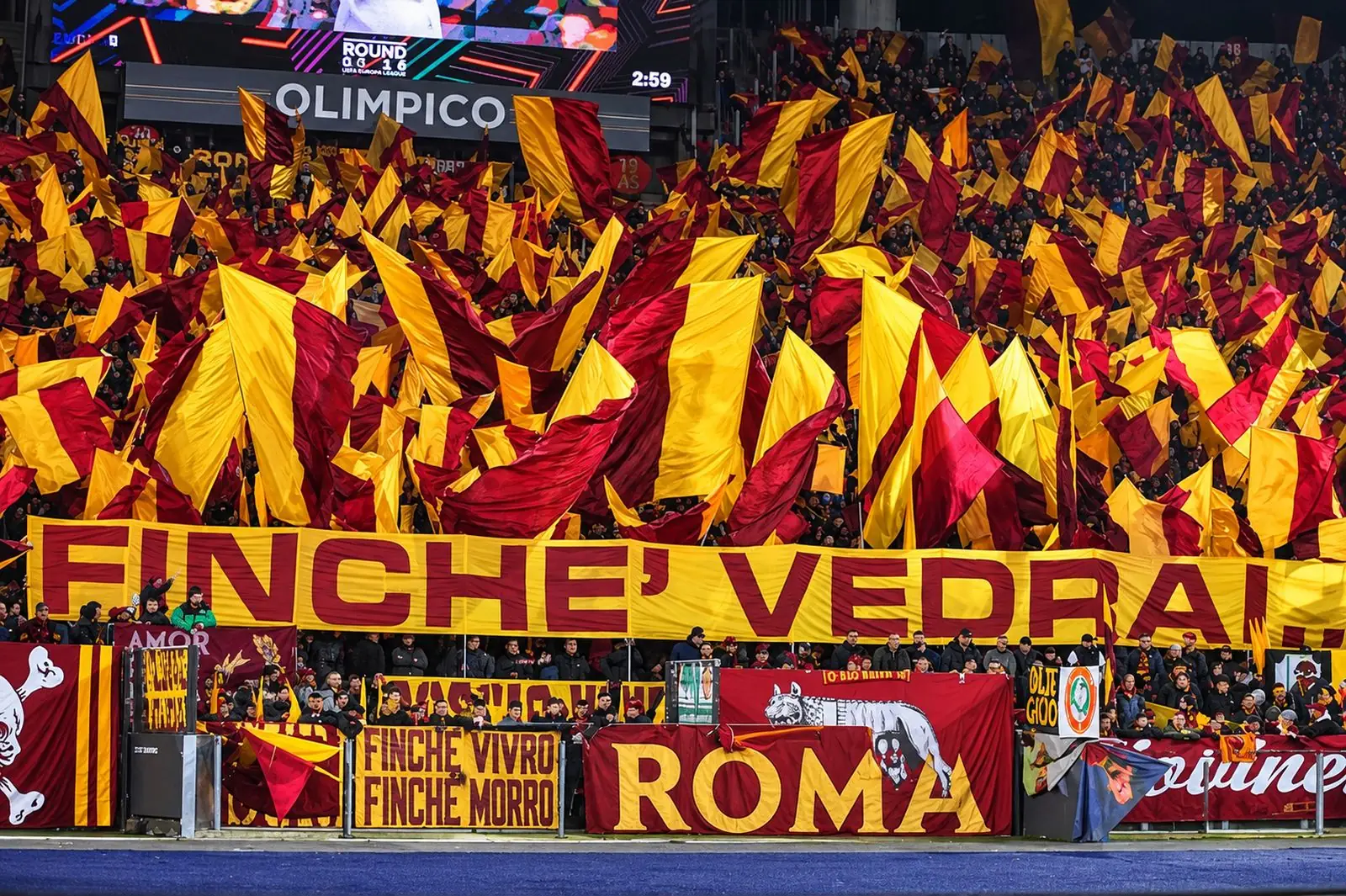
It all began there. The banker of Testaccio, Volk's first goal, the five-nil against Juventus, twenty thousand people so close to the pitch they could touch it. Standing right on top of your team and knowing how to wait for them, always. Almost a hundred years have passed, the Olimpico has taken the place of the wooden boards, the curves have become a sea. But every time the Sud rises to its feet as one, somewhere beneath the concrete the yellow and red wood of Testaccio still beats.
- campo testaccio
- roma first stadium
- roma 5-0 juventus 1931
- as roma history
- testaccio stadium
- renato sacerdoti
All our history · Quiz of the week
Fonti: Gli Eroi del Calcio, Campo Testaccio 90 anni fa · Gli Eroi del Calcio, storia dello stadio · AS Roma, l'ultima partita a Testaccio · AS Roma, Renato Sacerdoti · AS Roma, il 5-0 alla Juventus del 1931 · Gli Eroi del Calcio, 15 March 1931 · Calcio England, Campo Testaccio · Corriere dello Sport, Onorato sul nuovo Campo Testaccio · Wikipedia, Five to Nil